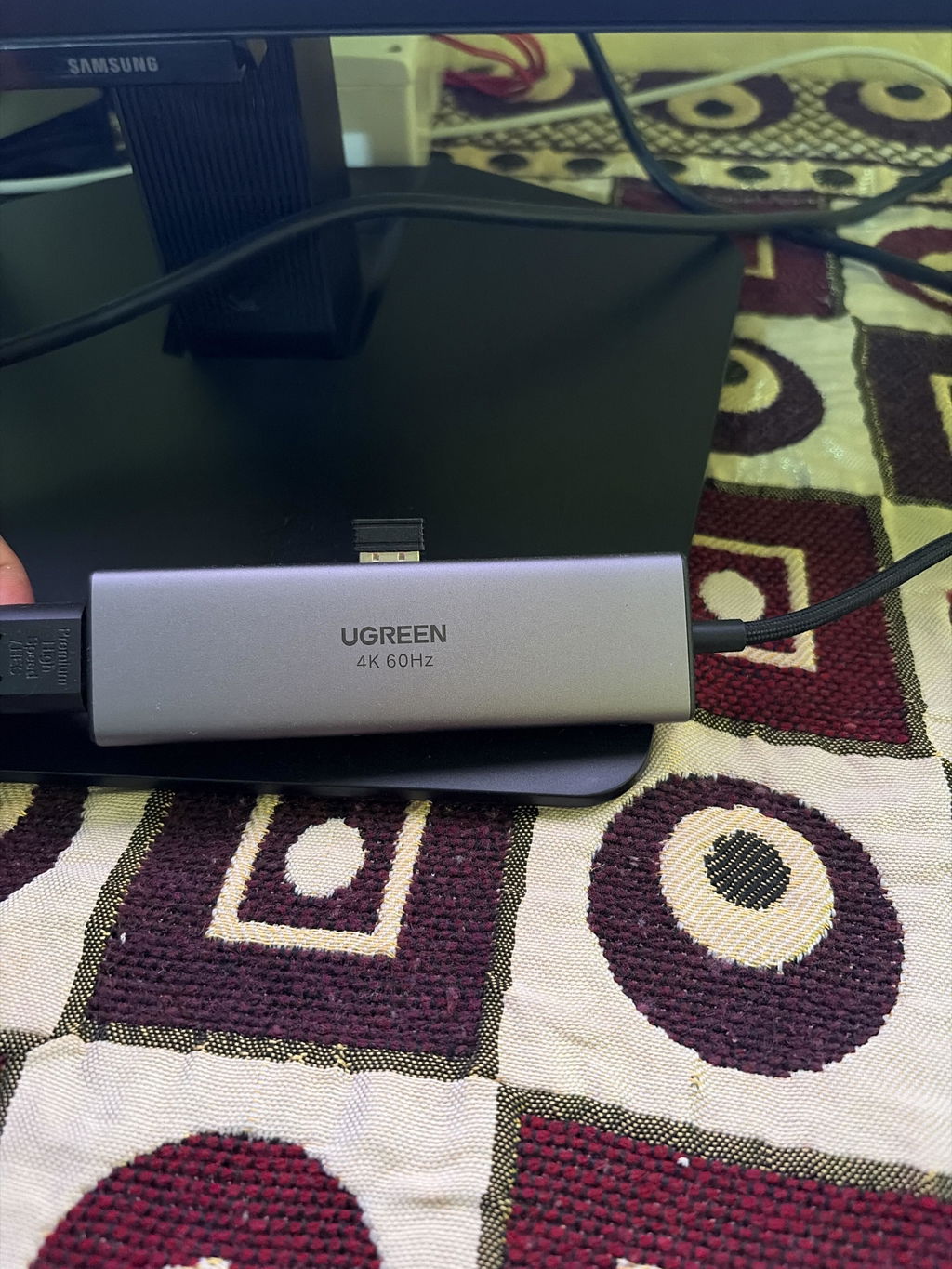
I had been using another coupler and I was getting less than 100 Mbps speed. Hence I decided to try Ugreen coupler. I had bought a 1000Mbps and this one. Both saved me from the hassle of changing the entire cable.
The charger works perfectly for my MacBook pro, samsung phone, iphone and samsung watch. All devices charged flawlessly. The charger is heavy and may fall when i place it in a socket on table. It heats up a bit but not too much.
Does the job perfectly.
The UGREEN DB9 RS232 Serial Cable (20147) is a 3m straight-through male to female extension cable for connecting or extending serial links between PCs, PLCs, POS terminals, barcode scanners, modems, UPS units and lab instruments. Thumbscrew connectors lock the link in place.
DB9RS232
Male → Female Extensionconnectors
Straightnot null modem
3mcable length
UGREEN DB9 RS232 Serial Cable key features
Straight-through wiring Pin 1 to pin 1, and so on.
Male to Female Extension Extends an existing DB9 serial cable.
Thumbscrews Secure connection.
Shielded For stable serial data.
Passive No power or driver.
Industrial and office PLCs, POS, scanners, modems, UPS.
UGREEN DB9 RS232 Serial Cable highlights
Straight-through pinout
Each pin connects to the same pin at the other end.
Thumbscrew connectors
Screw the plugs in for a connection that won't work loose.
UGREEN DB9 RS232 Serial Cable compatibility
Device
Status
What to expect
Devices with DB9 RS232 ports
Compatible
Extends DB9 links
PLCs, POS, scanners, modems, UPS
Compatible
RS232
Connecting two PCs directly (DTE to DTE)
Not supported
Needs a null-modem cable
Computers without a serial port
Partly
Add a UGREEN USB to RS232 adapter
RS485 or TTL devices
Not supported
RS232 only
Works with
DB9 RS232 equipment
Won't work with
Null-modem links
RS485/TTL
UGREEN 20147 3m DB9 RS232 Male to Female Extension Cable specifications
Model
UGREEN 20147
Length
3m
Connectors
DB9 male to DB9 female Extension
Standard
RS232
Wiring
Straight-through (not null modem)
Power / driver
None
What's in the box
UGREEN 3m DB9 RS232 cable (20147)
Devices not included.
Good to know
Straight-through, not null modem. To link two computers or two DTE devices directly, use a null-modem cable instead.
Match the baud rate and settings on both devices.
UGREEN DB9 RS232 Serial Cable FAQs
Is it a null-modem cable?
No, it's straight-through.
Which ports does it fit?
Extends DB9 links
Can I connect it to a laptop without a serial port?
Yes, with a UGREEN USB to RS232 adapter.
Does it need a driver?
No.
How long is it?
3m.
Genuine UGREEN, imported and sold by Sophus Technosol Pvt Ltd, the authorised national distributor. GST invoice with every order. 2-year India warranty.
The UGREEN DB9 RS232 Serial Cable (20147) is a 3m straight-through male to female extension cable for connecting or extending serial links between PCs, PLCs, POS terminals, barcode scanners, modems, UPS units and lab instruments. Thumbscrew connectors lock the link in place.
DB9RS232
Male → Female Extensionconnectors
Straightnot null modem
3mcable length
UGREEN DB9 RS232 Serial Cable key features
Straight-through wiring Pin 1 to pin 1, and so on.
Male to Female Extension Extends an existing DB9 serial cable.
Thumbscrews Secure connection.
Shielded For stable serial data.
Passive No power or driver.
Industrial and office PLCs, POS, scanners, modems, UPS.
UGREEN DB9 RS232 Serial Cable highlights
Straight-through pinout
Each pin connects to the same pin at the other end.
Thumbscrew connectors
Screw the plugs in for a connection that won't work loose.
UGREEN DB9 RS232 Serial Cable compatibility
Device
Status
What to expect
Devices with DB9 RS232 ports
Compatible
Extends DB9 links
PLCs, POS, scanners, modems, UPS
Compatible
RS232
Connecting two PCs directly (DTE to DTE)
Not supported
Needs a null-modem cable
Computers without a serial port
Partly
Add a UGREEN USB to RS232 adapter
RS485 or TTL devices
Not supported
RS232 only
Works with
DB9 RS232 equipment
Won't work with
Null-modem links
RS485/TTL
UGREEN 20147 3m DB9 RS232 Male to Female Extension Cable specifications
Model
UGREEN 20147
Length
3m
Connectors
DB9 male to DB9 female Extension
Standard
RS232
Wiring
Straight-through (not null modem)
Power / driver
None
What's in the box
UGREEN 3m DB9 RS232 cable (20147)
Devices not included.
Good to know
Straight-through, not null modem. To link two computers or two DTE devices directly, use a null-modem cable instead.
Match the baud rate and settings on both devices.
UGREEN DB9 RS232 Serial Cable FAQs
Is it a null-modem cable?
No, it's straight-through.
Which ports does it fit?
Extends DB9 links
Can I connect it to a laptop without a serial port?
Yes, with a UGREEN USB to RS232 adapter.
Does it need a driver?
No.
How long is it?
3m.
Genuine UGREEN, imported and sold by Sophus Technosol Pvt Ltd, the authorised national distributor. GST invoice with every order. 2-year India warranty.
UGREEN 20147 DB9 RS232 Extension Cable, 3m adds 3m of reach to compatible DB9 RS232 equipment. One end is male and the other female, with screw hardware to retain the connection.
3mLength
DB9 maleConnector A
DB9 femaleConnector B
170g listing valueListing weight
Features
What it does well.
Key features
02 · At a glance
DB9 male to female. RS232 does not have one universal speed guaranteed by a passive cable. Baud rate, cable length, capacitance, grounding, noise, transmitter strength and receiver tolerance determine reliable operation.
Straight-through. Both endpoints must use RS232 voltage levels and compatible DB9 pin assignments. A DB9 shell is also used for other protocols, proprietary control ports and CAN or RS485 wiring, so shape alone is not proof.
Shielded. RS232 defines electrical signalling and interface behaviour, while DB9 describes the connector form. The two terms are related in many PCs but are not interchangeable proof of compatibility.
3m. No driver belongs to this passive cable. A built-in COM port uses the operating system's serial driver; a USB-to-serial adapter needs the correct chipset driver for the host OS and architecture.
Connectors, direction and interface clarity
03 · Physical fit
DB9 male. Nine exposed contacts in a D-sub shell. Confirm the mating equipment expects this gender and an RS232 electrical interface.
DB9 female. Nine contact sockets in a matching D-sub shell. The male-to-female layout extends a port; it does not determine data direction by itself.
Screw hardware. Retaining screws/posts support a secure installed connection. Thread type and mating-post condition must match the equipment.
Shielded PVC cable. Foil shielding and the jacket help with interference and handling, but they cannot correct a ground loop, wrong pinout or incompatible voltage standard.
Signal, data or power performance
04 · Capability
RS232 does not have one universal speed guaranteed by a passive cable. Baud rate, cable length, capacitance, grounding, noise, transmitter strength and receiver tolerance determine reliable operation.
Use the 3m cable at the baud rate documented by both devices. Start at a conservative rate during commissioning, then increase only after error-free testing with the actual equipment.
Hardware flow control can require RTS/CTS or DTR/DSR lines in addition to TX, RX and ground. Because the published abbreviated pin list is irregular, confirm required control lines with the equipment and continuity documentation.
The cable carries the serial electrical signals already present. It has no buffer, isolation, surge suppression, level shifter, chipset or indicator lights.
What the entire connection must support
05 · Complete path
Both endpoints must use RS232 voltage levels and compatible DB9 pin assignments. A DB9 shell is also used for other protocols, proprietary control ports and CAN or RS485 wiring, so shape alone is not proof.
Straight-through means corresponding pins continue end to end. Equipment expecting a null-modem crossover requires a different cable or adapter with the specific crossed lines.
Ground potential between separated equipment can cause communication errors or damage. In industrial installations, follow the equipment maker's grounding and isolation instructions rather than relying on cable shielding.
A USB-to-RS232 converter may be used elsewhere in a correctly designed chain, but its chipset, driver, connector gender and pinout remain separate compatibility decisions.
Standards, negotiation and operating roles
06 · Behaviour
RS232 defines electrical signalling and interface behaviour, while DB9 describes the connector form. The two terms are related in many PCs but are not interchangeable proof of compatibility.
DTE and DCE conventions affect which device transmits on which pin and whether male/female connectors mate directly. Consult both device manuals instead of assuming that connector gender reveals DTE/DCE role.
The passive extension has no operating-system presence and needs no driver. The host COM port or USB serial adapter can require a driver and application-specific baud, parity, data-bit, stop-bit and flow-control settings.
Shielding can reduce coupled interference, but RS232 remains a single-ended interface. It is not a substitute for galvanic isolation, differential RS422/RS485 wiring or an installation designed for long noisy runs.
Ceiling, not a promise
A connector or standard label describes capability. The complete source, destination, cable route, software and negotiated mode determine the real result.
Compatible devices and systems
07 · Device fit
Legacy PC COM ports. Only real RS232 DB9 ports whose gender and pinout match the extension path.
Industrial and test equipment. Controllers, instruments, CNC/POS or diagnostic devices after verifying RS232 levels and every required pin.
Serial peripherals. Modems, scanners, printers, plotters, barcode or embroidery equipment only when the maker specifies compatible DB9 RS232.
USB serial chains. Conditional: the converter, driver, DB9 gender and pinout must already work before this passive extension is added.
Use scenarios
08 · Practical value
Equipment relocation. Add 3m between an existing COM port and nearby serial equipment without changing the interface.
Service access. Bring a recessed DB9 connection to an accessible panel while retaining screw locks.
Bench testing. Connect compatible instruments or controllers during commissioning with a known straight-through extension.
Cable-management route. Move a working serial connection around a rack or workstation while respecting grounding, bend radius and strain relief.
Setup and usability guidance
09 · Usability
Read both equipment manuals and record connector gender, RS232 voltage standard, straight-through/null-modem requirement and every signal line in use.
Stop communication and, where the device maker recommends it, power down equipment before connecting or disconnecting the DB9 plugs.
Align the D-sub shell, seat the connector straight and tighten both retention screws evenly by hand.
Test basic communication at a conservative baud rate, then verify bidirectional traffic and hardware-handshake behaviour under the real workload.
Route away from high-current, motor and switching-power wiring; secure the jacket so machinery or users cannot pull on the DB9 ports.
Operating-system, driver and software guidance
10 · Host behaviour
No driver belongs to this passive cable. A built-in COM port uses the operating system's serial driver; a USB-to-serial adapter needs the correct chipset driver for the host OS and architecture.
Applications must open the correct COM port with matching serial parameters. A successful physical connection does not prove that baud, parity, stop bits, flow control or device address are correct.
If data appears as random characters, verify serial settings before replacing the cable. If there is no traffic, verify TX/RX roles and whether the equipment expects straight-through or null-modem wiring.
Software boundary
The passive product has no firmware or driver. Connected hosts, adapters and peripherals can still require model software, permissions or settings.
What this product does
11 · scope
Adds 3m to a compatible DB9 RS232 male-to-female path.
Preserves a straight-through serial connection as identified by UGREEN.
Provides screw retention at the D-sub connectors.
Uses a shielded multi-conductor cable with a flexible PVC jacket.
Operates passively without a cable-specific driver or power supply.
What this product does not do
12 · Clear boundaries
It is not a null-modem/crossover cable and does not intentionally swap TX/RX or handshake lines.
It does not convert USB, Ethernet, TTL UART, RS422, RS485, CAN or another protocol to RS232.
It does not add a COM-port chipset, driver, electrical isolation, surge protection or signal amplification.
It cannot correct incompatible DTE/DCE roles, pinouts, baud settings or voltage levels.
A DB9 connector alone does not guarantee RS232; proprietary DB9 interfaces must not be connected without documentation.
What to do
13 · Best practice
Recommended. Verify RS232 electrical levels, DB9 genders, straight-through wiring and required handshake pins in both manuals.
Recommended. Tighten both screws evenly and support the cable near fixed equipment.
Recommended. Commission at a conservative baud rate and test real bidirectional data plus flow control.
Recommended. Use proper isolation or differential conversion where grounding, distance or electrical noise requires it.
What not to do
14 · Common mistakes
Avoid. Do not connect unknown DB9 ports solely because the plugs fit.
Avoid. Do not use this extension where a null-modem crossover is specified.
Avoid. Do not hot-plug industrial equipment unless both manufacturers explicitly permit it.
Avoid. Do not route beside motors, relays, high-current conductors or sharp moving machinery without appropriate engineering controls.
Warnings and limitations
15 · Read before use
Warning / limitation 1. RS232 ports can use voltages unsafe for TTL UART pins. Never connect directly to bare microcontroller headers without the correct level translator.
Warning / limitation 2. Ground-potential differences can damage ports or corrupt data. Follow equipment guidance on earthing and isolated interfaces.
Warning / limitation 3. At 3m, reliable baud rate remains installation-dependent. Shielding does not guarantee operation in a high-noise environment.
Warning / limitation 4. Inspect screw posts, shells and cable jacket before use. Stop using a cable with bent contacts, cracked moulding, exposed conductors or intermittent movement sensitivity.
Troubleshooting by symptom
16 · Diagnostics
No communication. Verify the correct COM port, identical serial settings, RS232 voltage levels, gender, pinout and straight-through requirement; then test directly without the extension.
Garbled characters. Match baud, parity, data bits and stop bits, reduce the baud rate and move the cable away from electrical noise.
Transmit works one way only. Check TX/RX roles, null-modem versus straight-through requirement and whether flow-control lines are required or asserted.
Intermittent disconnects. Tighten both screws evenly, support the cable, inspect contacts and test for ground/noise problems with the equipment maker's recommended method.
Confirm the sealed SKU and included-item list. Devices, converters, chargers, cables or mounting accessories are not included unless explicitly listed above.
FAQs
Questions buyers ask.
Is this a USB-to-serial adapter?
No. It has DB9 connectors at both ends and contains no USB chipset, COM-port electronics or driver. It only extends an already compatible RS232 path.
Is it a null-modem cable?
No. UGREEN identifies it as straight-through. Equipment requiring crossed TX/RX or handshake lines needs the correct null-modem wiring instead.
Does male-to-female tell me the data direction?
No. Connector gender helps it mate as an extension, while DTE/DCE roles and pin assignments determine data direction. Read both equipment manuals.
Will it work with every DB9 port?
No. DB9 is only a connector shell. Ports can carry RS232, RS422/485, CAN, proprietary control signals or other pinouts and voltage levels.
Does the cable need a driver?
No. A USB-to-serial adapter elsewhere in the chain can require a chipset driver, and the application still needs the correct COM-port settings.
What baud rate does it support?
UGREEN does not publish one universal guaranteed baud rate for this passive extension. Reliable speed depends on both devices, length, wiring, grounding, noise and settings.
Are all nine pins wired?
UGREEN describes the cable as straight-through but the India page's printed pin list is abbreviated. Confirm every required data and handshake line for safety-critical or specialised equipment.
Can I use it for TTL UART, RS485 or RS422?
No direct compatibility should be assumed. Those interfaces use different electrical levels or signalling and require the correct translator or differential hardware.
Why do I see random characters?
The most common causes are mismatched baud, parity, data bits or stop bits. Also check grounding, noise and whether the correct COM port is open.
How should I connect and secure it?
Align and seat each DB9 connector straight, then finger-tighten both screws evenly. Do not use the screws to draw a misaligned connector into place.
What is included?
One UGREEN 20147 3m DB9 male-to-female RS232 extension cable. Serial converters, null-modem adapters, isolators and equipment are not included.